
Let’s talk about food security.
Every few months, another headline appears announcing the “revolution” of vertical farming. Rows of LED lights. Stacked shelves of lettuce. Robotics, sensors, climate-controlled warehouses.
Investors love it.
Politicians love it.
And the media frames it as the inevitable future of feeding the world.
But here’s the uncomfortable truth no one wants to say out loud: You can’t feed a population on lettuce.
And you can’t build a food-secure future on technology that replaces the very systems that make food possible in the first place.
I’m not against innovation. And I love a small home hydroponic setup as much as anyone. But vertical farming as a large-scale solution? It’s a distraction. An expensive one.
Let’s talk about why.
CLICK HERE TO LISTEN TO THE PODCAST
The Calorie Problem No One Mentions
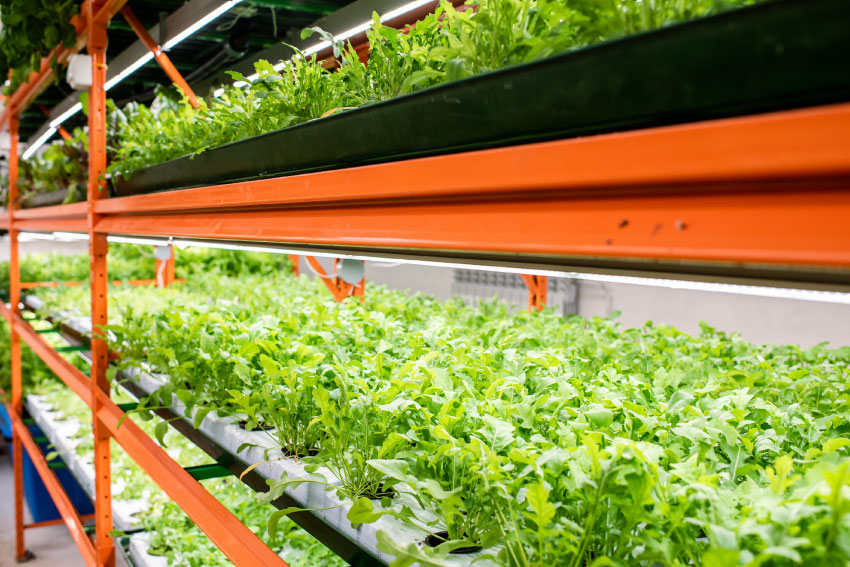
Vertical farms primarily grow low-calorie crops, such as lettuce, herbs, strawberries, and microgreens.
These are delicious. They look beautiful. They sell well. They’re social media-ready.
But they do not feed populations.
Civilizations are built on calorie crops: potatoes, sweet potatoes, grains, legumes, and root vegetables. These foods sustain life. They provide minerals. They store well. They create real, long-term food security.
Vertical farms do not grow these crops because they haven’t figured out how to, they take too long to grow, and they require more space.
So the entire model becomes a loop: tech grows expensive greens → wealthy consumers buy the greens → investors declare victory → repeat.
Meanwhile, the nutrient and calorie gap gets wider.
The Energy Burden No One Wants to Calculate
Proponents of vertical farming love to talk about “problem solving” or “using less land.” But they never open the conversation with the line item that matters most:
Energy. Massive amounts of it.
LED lights run nearly nonstop.
Climate control systems fight heat, cold, and humidity 24/7.
Pumps push water. Fans circulate air. Sensors monitor every variable.
Backup systems sit ready in case the grid flickers.
But the thing is, nature does all of this for free.
Naturally.
Vertical farms pay for it in kilowatts.
If the goal is sustainability, we can’t ignore the fact that we’re replacing sunlight, soil, and ecosystems with electricity, plastic, and industrial fertilizer.
There is nothing “green” about a warehouse that requires a power plant to keep lettuce alive.
The Natural System Works, We’re Just Not Using It Correctly
This is the part that frustrates me the most.
We live on a planet designed for food production.
Soil biology, sunlight, water cycles, decomposition, insects, microbes, animals, food scraps, this is the original growth infrastructure.
It’s resilient.
It’s self-regulating.
It’s a closed loop.
And it produces foods with natural nutrient density that food tech struggles to replicate.
Instead of working with that system, we’re trying to build a synthetic replacement in a warehouse.
It’s one thing to grow a few herbs in your kitchen with a countertop hydroponic kit.
It’s another to pretend that a sky-high energy operation is the solution to global food insecurity.
What Happens to Nutrient Density?
The conversation around nutrient density is often ignored because it’s inconvenient.
Hydroponic systems can grow clean produce, but can they grow nutrient-rich produce?
Real nutrient density comes from:
• minerals in the soil
• microbial activity
• organic matter
• real sunlight
• stressors in the natural environment
When you remove soil and sunlight, you remove an entire ecosystem of nutrients.
When you remove sunlight, you alter phytochemical expression.
When you remove microbes, you limit what the plant can actually build.
The result is food that may look perfect but carries less of what the body needs.
The Actual Fix: Regenerative Agriculture
We don’t need more warehouses.
We need better soil, better systems.
Regenerative agriculture does everything vertical farming promises, but naturally:
• it restores degraded land
• it increases water retention
• it captures carbon
• it improves biodiversity
• it grows calorie and nutrient-dense crops
• it strengthens rural economies
• it feeds people real food, not tech-backed salad
It closes the loop.
The irony is that the “future of food” already exists.
It’s just not flashy.
And it doesn’t pitch well to investors.
Healthy soil doesn’t get press releases.
LEDs do.
So Why the Hype?
Because vertical farming feels futuristic.
It feels controlled.
It feels like a shortcut, a way to farm without dealing with unpredictable weather, depleted soil, or land management.
But shortcuts in agriculture always come with a price.
The hype grows because money flows where novelty appears, not where solutions live.
It’s easier to sell a warehouse glowing with purple lights than a field of cover crops rebuilding the earth inch by inch.
But one of these can feed humanity.
The other cannot.
Let Food Return to the Earth
We don’t have to accept the narrative that food must become a technological product to be secure. We don’t have to outsource nature to a stack of shelves under artificial suns.
We already have a perfect system.
We just need to repair it.
If our goal is nourishment, sovereignty, resilience, and real nutrition, then the answer isn’t vertical farming. It’s soil. Sunlight. Water. Diversity. Regeneration.
This isn’t nostalgia.
It’s biology.
And the sooner we stop chasing engineered solutions for problems nature has already solved, the stronger our food system will become.
Read more…
USDA unveils $700M regenerative farming pilot program
